Thursday, September 27, 2012

Volkswagen commits to plug-in hybrid technology


Volkswagen AG has traditionally relied on diesel engines to meet fuel-economy and emissions requirements, but it’s also looking closely at advancing its plug-in hybrid powertrains with regulations set to tighten in many of its key markets.

Volkswagen chairman Martin Winterkorn laid out details of auto giant’s plans at an event the night before the Paris motor show. They include a product blitz that starts with plug-in hybrid versions of the Porsche Panamera and the ultra high-performance hybrid, the 918, in 2013.

VW will also launch plug-in variants of the Passat and Golf in 2014. They will be joined by versions of the Porsche Cayenne and Audi Q3 that year. A few years out, Audi will also get plug-in A6 and A8 models.

Winterkorn’s plans are for global markets. He didn’t specify when models would come to the United States.

“We will take this pioneering technology out of its niche and make it accessible to more customers,” he said.

Speaking at VW’s traditional gala on the eve of international motor shows, Winterkorn also voiced optimism for an economic recovery in Europe, where it is the largest automaker.

After selling more than 6 million units around the world from January through August, he said the firm remains on track for its goals this year.

“We are sticking to our ambitious targets for 2012,” he said.

Get more car news, reviews and opinion every day: Sign up to have the Autoweek Daily Drive delivered right to your inbox.

Volkswagen commits to plug-in hybrid technology


Volkswagen AG has traditionally relied on diesel engines to meet fuel-economy and emissions requirements, but it’s also looking closely at advancing its plug-in hybrid powertrains with regulations set to tighten in many of its key markets.

Volkswagen chairman Martin Winterkorn laid out details of auto giant’s plans at an event the night before the Paris motor show. They include a product blitz that starts with plug-in hybrid versions of the Porsche Panamera and the ultra high-performance hybrid, the 918, in 2013.

VW will also launch plug-in variants of the Passat and Golf in 2014. They will be joined by versions of the Porsche Cayenne and Audi Q3 that year. A few years out, Audi will also get plug-in A6 and A8 models.

Winterkorn’s plans are for global markets. He didn’t specify when models would come to the United States.

“We will take this pioneering technology out of its niche and make it accessible to more customers,” he said.

Speaking at VW’s traditional gala on the eve of international motor shows, Winterkorn also voiced optimism for an economic recovery in Europe, where it is the largest automaker.

After selling more than 6 million units around the world from January through August, he said the firm remains on track for its goals this year.

“We are sticking to our ambitious targets for 2012,” he said.

Get more car news, reviews and opinion every day: Sign up to have the Autoweek Daily Drive delivered right to your inbox.

Tuesday, September 18, 2012

It's not the miles, it's how you live them.

Just a little reminder that every second on earth is an opportunity to live life to its fullest. Brought to you by Volkswagen.

Monday, September 17, 2012

Football season is upon us! Brush-up on your tailgating knowledge!

Tailgaters_grills_fajitas_tortillas

It's nearly Fall, and odds are most of us are participating in, watching, or cheering on some kind of sports team. And for many fans, a game is not a game unless a tailgate precedes it. Taking it one step further... If you've got a 4WD Pick up Truck or SUV, chances are your vehicle serves as home base for your friends and family at the tailgate party!

Here are the best tips from professional tailgaters on how to throw the perfect tailgate party yourself, as well as tips to help you become the ultimate tailgater:


Make a Tailgating Checklist


To ensure nothing gets left at home, make a list of things you need to take to the tailgate party. Be sure to put your game tickets on the list too!


Have a Tailgating Theme


Think up a creative theme for your tailgate. If it's Thanksgiving, bring a turkey. If it's Christmas, bring a tree. Or, base your theme and decorations on the opponent. For example, you might have Cajun food against the Saints, Philly cheese steaks against the Eagles, or fish against the Dolphins.


Dress for the Occasion


Dress appropriately for several hours outdoors -- and be prepared for drastic temperature changes. And don't forget to wear comfortable shoes.


Show Some Tailgating Team Spirit


Show your team spirit... Wear team colors. Tailgaters are usually the biggest and best fans! After all, to become the ultimate tailgater, you'll want to stir up some tailgater's envy!


Timing is Everything


Get there early. You'll want to arrive 3-4 hours before game time to beat the crowd and claim your turf. And, plan to stay late so as to not miss a moment of the post-game enthusiasm.


Location, Location, Location


Set up your tailgate party near a grassy area, or bring a roll of Astroturf to set up at the end of the row -- for a more comfortable atmosphere with lots of room to socialize. Parking at the end of a row can also give you more partying space.


Tailgating in Parking Lots


Serious tailgaters choose a parking lot that has a view of the stadium if on-site parking is not available. Since the stadium is your Mecca, you need to be able to see it so you can bow to it occasionally.


Mark Your Spot At The Tailgating Party


A flag or team pennant on a tall pole helps people locate the party and makes a statement of team spirit.


Seating Arrangements


Don't worry about bringing chairs for everyone. Those who want to sit will bring their own chairs.


Generating Power


Serious tailgaters bring a small generator for powering a TV, stereo system or electric space heater during cold weather games.


Timing the Eats


Make sure your food is ready 1 to 2 hours before game time, so you have enough time to eat, clean up and find your seat in the stadium.


Put out the Fire


If you're using a charcoal grill, bring along extra water to douse the embers and a plastic garbage bag to put the cold coals in.


Be Smokey's Best Friend


Make sure that you have some way of extinguishing and throwing away your hot coals. Whatever you do, dispose of firewood or charcoal briquettes properly. Some stadiums have a designated place for hot ashes, but do not dump them in the grass or in trash bins.

Garbage In, Garbage Out


Bring your own lawn-size trash bags, because there never seem to be enough garbage receptacles on hand.

Monday, September 10, 2012

Monday Maintenance Tips: 13 Things You Should Keep in Your Car

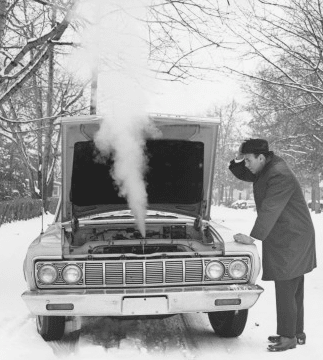
Broken down car

When I was growing up, I noticed that my dad kept the trunk of his car well-stocked with supplies. A lot of the equipment in his car was for his job busting poachers as a game warden, but most of the things he packed in his trunk were for emergency situations.

And there were plenty of times when my dad was able to put his trunk equipment to work.

For example,  about 20 years ago my dad was driving home to Oklahoma from New Mexico in his old burgundy Caprice.  Just outside of Groom, TX,  near the famous leaning water tower along I-40, a hellacious snow storm hit. It was a complete white out, so my dad had to pull over until things settled down.

But things didn’t settle down until a day later.

My dad had to spend the night in his car in the middle of nowhere while a blizzard roared outside. But because he had the forethought to prepare for situations like this, he was able to keep warm with some blankets and avoid ravaging hunger with some MREs

Many of you will be hitting the road this holiday season to visit family, so I consulted my dad, Tom McKay, and asked him what supplies he thinks every man should keep in his car. Here’s his suggested list.

1. Fully charged cell phone. Cell phones have significantly cut down on your chances of being stranded on the side of the road, but don’t count on it as your only line of defense. I’ve been in plenty of rural areas where my cell phone was only worthwhile for playing pong. In addition to you main phone, have a backup one that you can use to call 911. Any old cell phone will do, even if it’s not activated. Cellular carriers are required by law to complete 911 calls from any cell phone. Just throw that old Nokia cell phone from 1999 into your glove compartment and keep it there.

2. Jumper cables. You walk out to your car after a long day of work, stick the key into the ignition, give it a turn, and…. click, click. Crap! You’re going to be late to your kid’s football game! You then look up and notice you left the dome light on all day. It happens to the best of us. Car batteries die, so be ready with a set of jumper cables. And even if you never suffer a dead battery, it’s always good to have a set of jumper cables so you can help a damsel (or dude) in distress who needs their car jumped.

3. Flashlight. Good for providing light at nighttime when 1) putting on a spare tire, 2) jump starting another car, or 3) exchanging insurance information with the clueless driver that rear ended you at a stop light. Get a Maglite and you can also thump would-be car jackers in the head with it.

4. Roadside flares/reflective triangle. When pulled over on the side of the road, you’re basically a sitting duck, hoping that other drivers don’t turn the situation into a clip for one of those extreme video shows. It’s especially dangerous to be hanging out on the side of the road at night. Ensure that you and those around you are visible when you pull over to the side of the road by using road flares or at least a reflective triangle. The old school flaming flares seem to be harder to find these days as people switch to LED “flares.”

5. MREs. You never know when you’ll be stranded for long periods of times in your car. If you’ve ever driven out West, you’ll know that it can be hundreds of miles until the closest source of help. Unless you’ve built up a tolerance for extended periods of fasting, keep some MREs or granola/power bars in the back of your car to munch on while you wait for the tow truck to come.

6. Warm blankets. Tom can tell you firsthand why warm blankets are a must. It got pretty dang cold in his Caprice that night. But blankets have uses that go beyond emergency situations. It’s always good to have a blanket in the car for snuggling with your gal while you cheer for your team on a cold fall night or for laying it on the ground for a picnic.

7. Ice scraper. Don’t be the chump that’s out there scrapping their windshield with a credit card at 5AM in the morning. A good ice scraper will set you back just a few bucks, and it will make clearing your windshield much easier and much faster.

8. First aid kit. Whether you’re cleaning up a head wound filled with glass shards or fixing a boo boo on your two year old, it’s good to have a first aid kit. You can always buy one, but putting together your own in an Altoids tin is more fun.

9. Water bottles. For when you’re stranded in Death Valley in the middle of the hottest heat wave on record… or for any other time your car decides to break down on you. Or, for after you’ve left a concert and you’re so dang parched!

10. Tow strap. I don’t know how many times my dad saved my butt with this thing back in high school. Towards the end of my blue ’92 Chevy Cavalier’s (aka, “The Smurf”) life, it would just stop running and no amount of cable jumping would help get it started. For moments like these, my dad busted out the tow strap. You just attach one end of the tow strap to the front of the car that you want to pull  and the other to the hitch on the back of your car. The stranded driver stays in the dead car, puts it in neutral, and steers and brakes while it gets towed to its destination.

11. Folding shovel. There are a couple of instances where a folding shovel might come in handy. The first is when you get stuck in the snow or ice. You can use the shovel to dig some snow out and place some dirt under the tire to get more traction. The second situation is when a car tire gets stuck in a hole or something. You can use the shovel to dig about and create some ramps to help get your car unstuck. Also, it can be used as an improvised weapon, Green Beret-style.

12. LifeHammer. When you’re trying to escape from a sinking car, this little piece of plastic and metal can be the difference between life and death. Use it to break your window, cut your seatbelt and make your escape.

13. Portable air compressor. My dad feels like this was the best purchase he made for the car. When your tire is leaking but hasn’t totally blown out, instead of putting on a spare, you can use a portable air compressor to get back on the road. The compressor fills your tire up enough to allow you to drive to a repair shop to get it fixed. It plugs right into your cigarette lighter. Bonus use: no more paying 75 cents to fill up your tires at stingy gas stations.

There are kits you can buy that have a lot of this stuff in them, but I personally think it’s satisfying to assemble your own cache of supplies. And you can put together a better choice of things. 

000000000000broke_down_car

Couresty of The Art of Manliness Blog

Wednesday, September 5, 2012

Monday Maintenance Tip: Safely Avoiding Potholes

000000000000000000000000pot-hole
Potholes destroy tires, and the price of tires is rising sharply due to a supply shortage of natural rubber (yes, it still comes from trees, mostly in southeast Asia) and increasing demand from China, where car ownership is undergoing double-digit growth. Petroleum is also used in tire manufacturing, adding further to cost volatility. Blow out just one tire on one pothole and expect to pay out more – one major tire manufacturer increased prices three times in 2011 alone.

Damage from potholes doesn’t stop at tires. In a blink of the eye, you can experience $1000 of damage, possibly more, when your car hits a pothole – it’s possible to impair your car’s shock absorbers, suspension system, struts, rims and alignment as well. According to the American Association of State Highway and Transportation Officials, the average additional vehicle operating costs due to rough roads in 2007 was $400, with higher costs experienced in places including Baltimore ($589), Concord, NH ($656), Dallas-Fort Worth ($512), Los Angeles ($746), New Orleans ($622), New York-Newark ($638), Oklahoma City ($631), San Francisco-Oakland ($705) and Tulsa ($703). Deteriorating roads and general inflation since 2007 likely pushed these costs higher.

But there are things you can do before, during and after hitting a pothole. A preventive strategy is more about preparation, driving skills and reacting appropriately when a pothole sneaks up to surprise you. We suggest you approach it on three fronts, as follows.

Adopt smarter driving practices

You can reduce damage with vehicle preparation and driving with good sense:

  • Check your tire pressure to keep it at the tire manufacturer’s recommendation. If a tire is too soft, it handles poorly and in a sudden bump may rupture if the wheel rims pinch it against the jagged edge of a pothole. Over-inflated tires are more susceptible to damage as well.
  • Have a clean windshield! Your field of vision is critical.
  • Observe the traffic ahead of you – if other cars are swerving and stopping, it’s because of a problem in the road.
  • Beware of puddles – what might look like a little surface water might have a nasty, deep and sharp-edged pothole lurking below.
  • Reduce your speed on roads that are prone to potholes. Slower hits generally involve less damage, a simple matter of physics.
  • Stay focused and pay attention to the amount of traffic in front, behind and alongside you. You might be able to avoid potholes but do not want to cause an accident while doing so.

React quickly, intelligently when a pothole is upon you

Assuming you drive defensively – and do not tailgate, which restricts your ability to anticipate potholes or sudden braking by the vehicle in front of you – here is what to do if you are just about to hit a pothole:

  • Brake only lightly, if at all. And do something counterintuitive by letting off on the brakes entirely the moment before impact. Clamping down on your brakes at higher speeds not only tempts rear-end collisions but also compresses the front-end suspension system, increasing the damage.
  • Hard braking can actually cause greater contact between the tire and the pothole where it might otherwise glide over it.
  • Do not swerve in a last ditch attempt to avoid the pothole. Aside from creating a hazard for vehicles immediately behind and beside you, you risk hitting the pothole on an oblique angle, which can cause more damage to the tire, wheel rim and alignment than if you hit it perpendicularly.

Reduce the damage in the aftermath

Post-impact, the right moves can at least limit the extent of the damage:

  • Immediately pay attention to whether or not you have a flat tire. If so, minimize how much you drive on it, pull off the road as soon as you can do so safely where you can change the tire to your spare. This will minimize the damage to your wheel rim.
  • Even without a flat, there may be preliminary damage. At your next stop, check tire rims to see if they were bent, if there is visible cord material or bulging. This could fail later while driving.
  • Note if your car pulls to one side without corrective steering. This suggests the wheels are out of alignment and need mechanical attention.

In most municipalities, you can and should report potholes to the streets department – use a smartphone app such as SeeClickFix or SaveMyTire.com, or the local 3-1-1 or other call-in line. You might also be compensated for your loses if that pothole was reported previously and left unfixed, however rules for this are determined on a city, township or county level.


Courtesy of Pothole.info

Tuesday, September 4, 2012

Consider us totally honored: Strategic Vision names Volkswagen Total Quality Index leader

At Volkswagen, we take pride in everything we build—from fun, safe, fuel-efficient cars to a massive 22-person foosball table. That’s why we are especially proud that Strategic Vision, a research-based consultancy that studies how and why consumers make buying decisions, has named Volkswagen their Total Quality Index leader.

Strategic Vision identifies consumers’ motivations to purchase a particular product by looking at everything from product attributes and personal benefits to perceived value and emotions. Three Volkswagen models were named segment leaders in the Total Quality Index study. The Golf took top honors in the small multi-function segment, the Eos led in the convertible under $30,000 segment, and the Tiguan placed first in the entry utility segment.

While Strategic Vision currently has no plans to expand their Total Quality Index to include an oversized foosball table category, we feel pretty confident about our chances should that ever happen.

Consider us totally honored: Strategic Vision names Volkswagen Total Quality Index leader

2012-tiguan-1-587x295

At Volkswagen, we take pride in everything we build—from fun, safe, fuel-efficient cars to a massive 22-person foosball table. That’s why we are especially proud that Strategic Vision, a research-based consultancy that studies how and why consumers make buying decisions, has named Volkswagen their Total Quality Index leader.

Strategic Vision identifies consumers’ motivations to purchase a particular product by looking at everything from product attributes and personal benefits to perceived value and emotions. Three Volkswagen models were named segment leaders in the Total Quality Index study. The Golf took top honors in the small multi-function segment, the Eos led in the convertible under $30,000 segment, and the Tiguan placed first in the entry utility segment.

While Strategic Vision currently has no plans to expand their Total Quality Index to include an oversized foosball table category, we feel pretty confident about our chances should that ever happen.