Wednesday, October 24, 2012

Thursday, October 18, 2012
Tuesday, October 16, 2012
Volkswagen presents greenest Golf of all time

- Group rejects Greenpeace accusations
- Golf is genuine three-liter car
- Climate-friendly fuel-saving technology is standard
- 31 Group model variants emit less than 100 g CO2
Wolfsburg/Paris, 27 September 2012 - Today, Volkswagen presented the seventh generation of Europe’s most popular car in Paris – it is the greenest Golf of all time. In view of criticism by some environmental activists, the car maker renewed its claim that the new series with its optimized fuel consumption also includes a three-liter version and significantly raises the bar when it comes to environmental compatibility. Allegations that Volkswagen does not make any progress with regard to becoming more environment-friendly, are unfounded and made up out of thin air.
Volkswagen is thus demonstrating that the Golf not only embodies the brand claim of “Das Auto” (The Car), but is in fact “The Green Car” – without compromising on safety and ride comfort. With the market launch of the new Golf, the Group is asserting its leading technological role in all relevant power output and fuel consumption categories in the compact class. The vehicle’s weight has been reduced by up to 100 kilos, and fuel consumption – and thus CO2 emissions – have been reduced by up to 23 percent. An environmental commendation certified by the TÜV technical inspection authority confirms a significant improvement in the eco-balance over the entire life cycle compared with the predecessor model. The most fuel-efficient engines offered at launch consume 3.8 liters of diesel, corresponding to 99 g/km CO2 (1.6 l TDI with 105 PS) or 4.8 liters of petrol, equivalent to 112 g/km CO2 (1.4 l TSI with 140 PS). The BlueMotion variant will consume only 3.2 liters and emit 85 g/km CO2. Fuel-saving technology such as the Stop/Start system and brake energy recovery come as standard, so they do not generate additional cost.
The Group’s program now already includes 31 model variants with emissions of less than 100 grams CO2 per kilometer. Volkswagen stressed that it remains willing to hold an open dialogue with critics, but that it had to be objective and fair. Loud PR actions and false pretences do not help anyone – least of all the environment.
Volkswagen has set its sights on becoming the world’s most ecological automaker by 2018. To that end, over two-thirds of investment totaling €62.4 billion for the period to 2016 will be spent on ever more efficient vehicles, powertrains, technologies and environmentally-compatible production. The Group has voluntarily committed to a CO2 target of less than 120 grams per kilometer by 2015. Each model generation will be 10 to 15 percent more fuel efficient than its predecessor. Production will be ecologically restructured by 2018, with energy and water consumption lowered by 25 percent each, and waste and emissions also reduced by one quarter each. Greenhouse gas emissions in production are to be reduced by 40 percent by 2020.
Monday, October 15, 2012
5 money-saving DIY tips for car owners!

Below are a few tips from our automotive experts.
 1) Treating hazy headlight lenses. Modern headlight assemblies usually have clear plastic covers that can grow hazy over the years from exposure to the elements. To save the expense of changing the whole headlight reflector assembly, you can use a restoration kit, usually consisting of abrasive cloths and a special finishing liquid. Some kits are applied with elbow grease, while others call for an electric drill.
2) Windshield wipers. You can extend the life of wiper blades by keeping them clean. Wipe off the rubber edge with a paper towel moistened with glass cleaner, or water and a little dish soap. Wiper blades don't last long. In our tests we've found that six months is about the best you can expect a set of wiper blades to stay in top form.
3) Wash and wax your car. Giving your car a good cleaning helps preserve the paint by removing road grime and residues that can eat through the finish. The time spent hand washing a car gives you a close-up view of every body panel, so you can spot scratches, chips, and dings you may not have otherwise noticed. To maintain a quality shine, periodically apply car wax. A spray wax is best suited to weekly or special-occasion applications. Other waxes can be used less frequently, every 2-3 months.
4) Light bulbs. Changing a light bulb isn't difficult—most these days have a twist-and-pull bayonet base or they simply pull out and push in. Bulb specifications are usually found in the owner's manual. However, accessing a bulb (usually called a lamp in industry parlance) can be a real chore. Consult a service manual or look online if access to the bulb isn't obvious. Auto-parts stores and your franchised dealer carry good selections of replacement bulbs. If you're replacing a halogen headlight bulb take care not to touch the glass with your bare fingers. Skin oils on the quartz glass are said to shorten its life.
5) Touch-up paint. Touching up paint flaws early can save a heap of money down the road. You can touch up small scratches and chips with touch-up paint, available for a few dollars at your car dealership and at some auto-parts stores. Make sure you get an exact color match. Touch-up paint usually comes in a small bottle with an applicator brush in the lid. Otherwise, use a small, pointed artist's brush and cover the scratch by going over it in tiny dabs. Let this paint dry for at least a day or two before polishing the car.
Copyright © 2006-2012 Consumers Union of U.S., Inc. No reproduction, in whole or in part, without written permission.
Tuesday, October 9, 2012
Volkswagen Jetta Hybrid sets a land speed record at Bonneville

Using a specially modified car , Volkswagen was able to average 186.313 mph (299.842 km/h) over the course two runs. This earned the model a Southern California Timing Association (SCTA) H/PS land speed record for "production cars with engines of less than 1.5 liters that use forced induction." The car also beat its previous top speed record by averaging 187.147 mph (301.184 km/h) during the last mile of its second run.
In a statement, Volkswagen America CEO Jonathan Browning said "We're very proud that the Jetta Hybrid has not only posted the fastest speed for a hybrid at Bonneville, but that it has gone out and broken an SCTA land speed record as well. Achieving this record at Bonneville shows that the all-new 2013 Jetta Hybrid is a distinctly different offering in the compact hybrid class, offering excellent fuel economy while retaining the fun-to-drive nature expected from a Volkswagen."
Check out the press release for additional information
Source: Volkswagen US
Monday, October 8, 2012
Top Tips for Walking Safely
 Tips for Walkers
- Developmentally, most kids can't judge speeds and distances until at least age 10, so younger kids need to cross with an adult
- Did you know most walking injuries happen mid-block or someplace other than intersections? Whenever possible, cross the street at corners, using traffic signals and crosswalks
- Look left, right and left again before crossing the street, and keep looking and listening while crossing
- Walk, don't run, when crossing the street
- It's always best to walk on sidewalks or paths, but if there are no sidewalks, walk facing traffic as far to the left as possible
- Remove headphones when crossing the street
- If you need to use your phone, stop walking
- Distraction among drivers is at an all-time high today, so try to make eye contact with the driver before you step into the road
Tips For Drivers
- Slow down and be especially alert in residential neighborhoods and school zones, before and after school hours
- Most walkers are injured mid-block, not at intersections, so watch out for kids who may dart into traffic or cross where they shouldn't
- Give pedestrians the right of way at a crosswalk
- Using cell phones, even hands-free, makes it harder for drivers to be alert to walkers who may also be distracted on cell phones.
Thursday, October 4, 2012
VOLKSWAGEN UNVEILS THE NEW BEETLE CONVERTIBLE

Herndon, VA - Today, Volkswagen unveils the latest Beetle Convertible, the third-generation of the iconic VW ragtop. Like its predecessors—the type 15 from 1949 and the 2003 New Beetle Convertible—the curvaceous convertible offers the perfect combination of practicality and fun for four.
In creating the latest version of the Beetle Convertible, Volkswagen has reinterpreted the Beetle Convertible’s timeless design with a sportier and more dynamic silhouette, just as it did with the latest Beetle coupe. The combination of a flatter roofline and a more upright windshield gives the car a shape that’s more closely aligned with the first generation of Beetle convertibles. Volkswagen decided to stick with a traditional soft-top rather than incorporate a folding hardtop on the car. When the top is down, it lies flat, giving good rear visibility. Although the top looks compact when furled, it’s actually wide and long when in place, an action that takes a little over 10 seconds at the touch of a button. Inside, the Beetle Convertible retains the design cues that have made the latest Beetle such a hit with consumers, such as the body-color dashboard and the stylish gauges and trim. The spacious cabin has space for four full-size adults and is able to carry plenty of luggage: a fold-down split rear bench seat increases the practicality even further. In any Volkswagen, safety is paramount and to that end, the company has developed an Automatic Rollover Support System. Two roll-over bars are concealed behind the back of the rear bench seat, activated by the computer that deploys the airbags in the case of a crash. Along with the fixed A-pillars, they provide effective protection for the occupants of all four seats within milliseconds. Driver and front passenger combined head-thorax airbags are also among the standard equipment. The new Beetle Convertible will be available in the United States with three engine options. The entry-level powerplant is the familiar 2.5-liter five-cylinder engine that makes 170 horsepower and 177 pound-feet of torque, mated to a six-speed automatic transmission. Volkswagen’s fuel-efficient 2.0-liter TDI® Clean Diesel four-cylinder engine makes 140 hp and 236 lb-ft, but just as importantly delivers an EPA estimated fuel economy figure of 41 mpg on the highway with the six-speed manual transmission. (A six-speed DSG® dual-clutch automatic is also available with this engine.) Finally, the 2.0-liter turbocharged TSI® four-cylinder, which makes 200 hp and 207 lb-ft, can be ordered with either a six-speed manual or DSG automatic. Beetle Convertible pricing for the U.S. will be announced closer to launch, which occurs in the last quarter of 2012. About Volkswagen of America, Inc.Founded in 1955, Volkswagen of America, Inc. is headquartered in Herndon, Virginia. It is a subsidiary of Volkswagen AG, headquartered in Wolfsburg, Germany. Volkswagen’s operations in the United States include research and development, parts and vehicle processing, parts distribution centers, sales, marketing and service offices, financial service centers, and its state-of-the-art manufacturing facility in Chattanooga, Tennessee. Volkswagen is one of the world's largest producers of passenger cars and Europe's largest automaker. Volkswagen sells the Beetle, Eos, Golf, Golf R, GTI, Jetta, Jetta SportWagen, Passat, CC, Tiguan, Touareg and Routan vehicles through approximately 600 independent U.S. dealers. Visit Volkswagen of America online at www.vw.com or media.vw.com to learn more. Notes:
This press release and images of the Beetle Convertible are available at media.vw.com. “DSG”, “TDI”, “TSI”, “VW”, “Volkswagen”, all model names and the Volkswagen logo are registered trademarks of Volkswagen AG. Features and technical data apply to models offered in the USA. They may differ in other countries. Where stated, fuel economy values (mpg) are EPA estimates. Your mileage will vary.
Tuesday, October 2, 2012
Volkswagen sales could near U.S. record set in 1970

Volkswagen Group of America’s chief said today the company could near its all-time sales record this year.
"We may get close" to the 569,696 car sales the VW group achieved in the U.S. in 1970, Chief Executive Jonathan Browning told Reuters at the Paris car show today.
Browning also said he was still discussing with group management the possibility of introducing a midsize SUV in the U.S., although he could not yet confirm the project would go ahead.
Industry observers have said such an SUV could be produced at the Chattanooga auto assembly plant where the midsize Passat is assembled.
Just last week, VW reported Passat sales have set an new U.S. sales mark with more than three months remaining in the year.
Passat sales hit 77,524 last week. The old full-year record was set in 2001, according to VW.
Monday, October 1, 2012
5 Money Saving Car Tips!

Below are a few tips from our automotive experts.
1) Treating hazy headlight lenses. Modern headlight assemblies usually have clear plastic covers that can grow hazy over the years from exposure to the elements. To save the expense of changing the whole headlight reflector assembly, you can use a restoration kit, usually consisting of abrasive cloths and a special finishing liquid. Some kits are applied with elbow grease, while others call for an electric drill.
2) Windshield wipers. You can extend the life of wiper blades by keeping them clean. Wipe off the rubber edge with a paper towel moistened with glass cleaner, or water and a little dish soap. Wiper blades don't last long. In our tests we've found that six months is about the best you can expect a set of wiper blades to stay in top form.
3) Wash and wax your car. Giving your car a good cleaning helps preserve the paint by removing road grime and residues that can eat through the finish. The time spent hand washing a car gives you a close-up view of every body panel, so you can spot scratches, chips, and dings you may not have otherwise noticed. To maintain a quality shine, periodically apply car wax. A spray wax is best suited to weekly or special-occasion applications. Other waxes can be used less frequently, every 2-3 months.
4) Light bulbs. Changing a light bulb isn't difficult—most these days have a twist-and-pull bayonet base or they simply pull out and push in. Bulb specifications are usually found in the owner's manual. However, accessing a bulb (usually called a lamp in industry parlance) can be a real chore. Consult a service manual or look online if access to the bulb isn't obvious. Auto-parts stores and your franchised dealer carry good selections of replacement bulbs. If you're replacing a halogen headlight bulb take care not to touch the glass with your bare fingers. Skin oils on the quartz glass are said to shorten its life.
5) Touch-up paint. Touching up paint flaws early can save a heap of money down the road. You can touch up small scratches and chips with touch-up paint, available for a few dollars at your car dealership and at some auto-parts stores. Make sure you get an exact color match. Touch-up paint usually comes in a small bottle with an applicator brush in the lid. Otherwise, use a small, pointed artist's brush and cover the scratch by going over it in tiny dabs. Let this paint dry for at least a day or two before polishing the car.
Copyright © 2006-2012 Consumers Union of U.S., Inc. No reproduction, in whole or in part, without written permission.
Thursday, September 27, 2012
Volkswagen commits to plug-in hybrid technology
Volkswagen AG has traditionally relied on diesel engines to meet fuel-economy and emissions requirements, but it’s also looking closely at advancing its plug-in hybrid powertrains with regulations set to tighten in many of its key markets.
Volkswagen chairman Martin Winterkorn laid out details of auto giant’s plans at an event the night before the Paris motor show. They include a product blitz that starts with plug-in hybrid versions of the Porsche Panamera and the ultra high-performance hybrid, the 918, in 2013.
VW will also launch plug-in variants of the Passat and Golf in 2014. They will be joined by versions of the Porsche Cayenne and Audi Q3 that year. A few years out, Audi will also get plug-in A6 and A8 models.
Winterkorn’s plans are for global markets. He didn’t specify when models would come to the United States.
“We will take this pioneering technology out of its niche and make it accessible to more customers,” he said.
Speaking at VW’s traditional gala on the eve of international motor shows, Winterkorn also voiced optimism for an economic recovery in Europe, where it is the largest automaker.
After selling more than 6 million units around the world from January through August, he said the firm remains on track for its goals this year.
“We are sticking to our ambitious targets for 2012,” he said.
Get more car news, reviews and opinion every day: Sign up to have the Autoweek Daily Drive delivered right to your inbox.
Volkswagen commits to plug-in hybrid technology

Volkswagen AG has traditionally relied on diesel engines to meet fuel-economy and emissions requirements, but it’s also looking closely at advancing its plug-in hybrid powertrains with regulations set to tighten in many of its key markets.
Volkswagen chairman Martin Winterkorn laid out details of auto giant’s plans at an event the night before the Paris motor show. They include a product blitz that starts with plug-in hybrid versions of the Porsche Panamera and the ultra high-performance hybrid, the 918, in 2013.
VW will also launch plug-in variants of the Passat and Golf in 2014. They will be joined by versions of the Porsche Cayenne and Audi Q3 that year. A few years out, Audi will also get plug-in A6 and A8 models.
Winterkorn’s plans are for global markets. He didn’t specify when models would come to the United States.
“We will take this pioneering technology out of its niche and make it accessible to more customers,” he said.
Speaking at VW’s traditional gala on the eve of international motor shows, Winterkorn also voiced optimism for an economic recovery in Europe, where it is the largest automaker.
After selling more than 6 million units around the world from January through August, he said the firm remains on track for its goals this year.
“We are sticking to our ambitious targets for 2012,” he said.
Get more car news, reviews and opinion every day: Sign up to have the Autoweek Daily Drive delivered right to your inbox.
Tuesday, September 18, 2012
It's not the miles, it's how you live them.
Just a little reminder that every second on earth is an opportunity to live life to its fullest. Brought to you by Volkswagen.
Monday, September 17, 2012
Football season is upon us! Brush-up on your tailgating knowledge!

It's nearly Fall, and odds are most of us are participating in, watching, or cheering on some kind of sports team. And for many fans, a game is not a game unless a tailgate precedes it. Taking it one step further... If you've got a 4WD Pick up Truck or SUV, chances are your vehicle serves as home base for your friends and family at the tailgate party!
Here are the best tips from professional tailgaters on how to throw the perfect tailgate party yourself, as well as tips to help you become the ultimate tailgater:
Make a Tailgating Checklist
To ensure nothing gets left at home, make a list of things you need to take to the tailgate party. Be sure to put your game tickets on the list too!
Have a Tailgating Theme
Think up a creative theme for your tailgate. If it's Thanksgiving, bring a turkey. If it's Christmas, bring a tree. Or, base your theme and decorations on the opponent. For example, you might have Cajun food against the Saints, Philly cheese steaks against the Eagles, or fish against the Dolphins.
Dress for the Occasion
Dress appropriately for several hours outdoors -- and be prepared for drastic temperature changes. And don't forget to wear comfortable shoes.
Show Some Tailgating Team Spirit
Show your team spirit... Wear team colors. Tailgaters are usually the biggest and best fans! After all, to become the ultimate tailgater, you'll want to stir up some tailgater's envy!
Timing is Everything
Get there early. You'll want to arrive 3-4 hours before game time to beat the crowd and claim your turf. And, plan to stay late so as to not miss a moment of the post-game enthusiasm.
Location, Location, Location
Set up your tailgate party near a grassy area, or bring a roll of Astroturf to set up at the end of the row -- for a more comfortable atmosphere with lots of room to socialize. Parking at the end of a row can also give you more partying space.
Tailgating in Parking Lots
Serious tailgaters choose a parking lot that has a view of the stadium if on-site parking is not available. Since the stadium is your Mecca, you need to be able to see it so you can bow to it occasionally.
Mark Your Spot At The Tailgating Party
A flag or team pennant on a tall pole helps people locate the party and makes a statement of team spirit.
Seating Arrangements
Don't worry about bringing chairs for everyone. Those who want to sit will bring their own chairs.
Generating Power
Serious tailgaters bring a small generator for powering a TV, stereo system or electric space heater during cold weather games.
Timing the Eats
Make sure your food is ready 1 to 2 hours before game time, so you have enough time to eat, clean up and find your seat in the stadium.
Put out the Fire
If you're using a charcoal grill, bring along extra water to douse the embers and a plastic garbage bag to put the cold coals in.
Be Smokey's Best Friend
Make sure that you have some way of extinguishing and throwing away your hot coals. Whatever you do, dispose of firewood or charcoal briquettes properly. Some stadiums have a designated place for hot ashes, but do not dump them in the grass or in trash bins.
Garbage In, Garbage Out
Bring your own lawn-size trash bags, because there never seem to be enough garbage receptacles on hand.
Thursday, September 13, 2012
Wednesday, September 12, 2012

Tuesday, September 11, 2012

Monday, September 10, 2012
Monday Maintenance Tips: 13 Things You Should Keep in Your Car
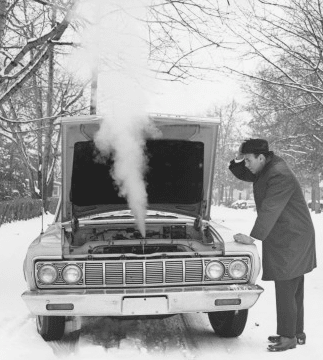
When I was growing up, I noticed that my dad kept the trunk of his car well-stocked with supplies. A lot of the equipment in his car was for his job busting poachers as a game warden, but most of the things he packed in his trunk were for emergency situations.
And there were plenty of times when my dad was able to put his trunk equipment to work.
For example, about 20 years ago my dad was driving home to Oklahoma from New Mexico in his old burgundy Caprice. Just outside of Groom, TX, near the famous leaning water tower along I-40, a hellacious snow storm hit. It was a complete white out, so my dad had to pull over until things settled down.
But things didn’t settle down until a day later.
My dad had to spend the night in his car in the middle of nowhere while a blizzard roared outside. But because he had the forethought to prepare for situations like this, he was able to keep warm with some blankets and avoid ravaging hunger with some MREs
Many of you will be hitting the road this holiday season to visit family, so I consulted my dad, Tom McKay, and asked him what supplies he thinks every man should keep in his car. Here’s his suggested list.
1. Fully charged cell phone. Cell phones have significantly cut down on your chances of being stranded on the side of the road, but don’t count on it as your only line of defense. I’ve been in plenty of rural areas where my cell phone was only worthwhile for playing pong. In addition to you main phone, have a backup one that you can use to call 911. Any old cell phone will do, even if it’s not activated. Cellular carriers are required by law to complete 911 calls from any cell phone. Just throw that old Nokia cell phone from 1999 into your glove compartment and keep it there.
2. Jumper cables. You walk out to your car after a long day of work, stick the key into the ignition, give it a turn, and…. click, click. Crap! You’re going to be late to your kid’s football game! You then look up and notice you left the dome light on all day. It happens to the best of us. Car batteries die, so be ready with a set of jumper cables. And even if you never suffer a dead battery, it’s always good to have a set of jumper cables so you can help a damsel (or dude) in distress who needs their car jumped.
3. Flashlight. Good for providing light at nighttime when 1) putting on a spare tire, 2) jump starting another car, or 3) exchanging insurance information with the clueless driver that rear ended you at a stop light. Get a Maglite and you can also thump would-be car jackers in the head with it.
4. Roadside flares/reflective triangle. When pulled over on the side of the road, you’re basically a sitting duck, hoping that other drivers don’t turn the situation into a clip for one of those extreme video shows. It’s especially dangerous to be hanging out on the side of the road at night. Ensure that you and those around you are visible when you pull over to the side of the road by using road flares or at least a reflective triangle. The old school flaming flares seem to be harder to find these days as people switch to LED “flares.”
5. MREs. You never know when you’ll be stranded for long periods of times in your car. If you’ve ever driven out West, you’ll know that it can be hundreds of miles until the closest source of help. Unless you’ve built up a tolerance for extended periods of fasting, keep some MREs or granola/power bars in the back of your car to munch on while you wait for the tow truck to come.
6. Warm blankets. Tom can tell you firsthand why warm blankets are a must. It got pretty dang cold in his Caprice that night. But blankets have uses that go beyond emergency situations. It’s always good to have a blanket in the car for snuggling with your gal while you cheer for your team on a cold fall night or for laying it on the ground for a picnic.
7. Ice scraper. Don’t be the chump that’s out there scrapping their windshield with a credit card at 5AM in the morning. A good ice scraper will set you back just a few bucks, and it will make clearing your windshield much easier and much faster.
8. First aid kit. Whether you’re cleaning up a head wound filled with glass shards or fixing a boo boo on your two year old, it’s good to have a first aid kit. You can always buy one, but putting together your own in an Altoids tin is more fun.
9. Water bottles. For when you’re stranded in Death Valley in the middle of the hottest heat wave on record… or for any other time your car decides to break down on you. Or, for after you’ve left a concert and you’re so dang parched!
10. Tow strap. I don’t know how many times my dad saved my butt with this thing back in high school. Towards the end of my blue ’92 Chevy Cavalier’s (aka, “The Smurf”) life, it would just stop running and no amount of cable jumping would help get it started. For moments like these, my dad busted out the tow strap. You just attach one end of the tow strap to the front of the car that you want to pull and the other to the hitch on the back of your car. The stranded driver stays in the dead car, puts it in neutral, and steers and brakes while it gets towed to its destination.
11. Folding shovel. There are a couple of instances where a folding shovel might come in handy. The first is when you get stuck in the snow or ice. You can use the shovel to dig some snow out and place some dirt under the tire to get more traction. The second situation is when a car tire gets stuck in a hole or something. You can use the shovel to dig about and create some ramps to help get your car unstuck. Also, it can be used as an improvised weapon, Green Beret-style.
12. LifeHammer. When you’re trying to escape from a sinking car, this little piece of plastic and metal can be the difference between life and death. Use it to break your window, cut your seatbelt and make your escape.
13. Portable air compressor. My dad feels like this was the best purchase he made for the car. When your tire is leaking but hasn’t totally blown out, instead of putting on a spare, you can use a portable air compressor to get back on the road. The compressor fills your tire up enough to allow you to drive to a repair shop to get it fixed. It plugs right into your cigarette lighter. Bonus use: no more paying 75 cents to fill up your tires at stingy gas stations.
There are kits you can buy that have a lot of this stuff in them, but I personally think it’s satisfying to assemble your own cache of supplies. And you can put together a better choice of things.

Couresty of The Art of Manliness Blog
Wednesday, September 5, 2012
Monday Maintenance Tip: Safely Avoiding Potholes

Damage from potholes doesn’t stop at tires. In a blink of the eye, you can experience $1000 of damage, possibly more, when your car hits a pothole – it’s possible to impair your car’s shock absorbers, suspension system, struts, rims and alignment as well. According to the American Association of State Highway and Transportation Officials, the average additional vehicle operating costs due to rough roads in 2007 was $400, with higher costs experienced in places including Baltimore ($589), Concord, NH ($656), Dallas-Fort Worth ($512), Los Angeles ($746), New Orleans ($622), New York-Newark ($638), Oklahoma City ($631), San Francisco-Oakland ($705) and Tulsa ($703). Deteriorating roads and general inflation since 2007 likely pushed these costs higher.
But there are things you can do before, during and after hitting a pothole. A preventive strategy is more about preparation, driving skills and reacting appropriately when a pothole sneaks up to surprise you. We suggest you approach it on three fronts, as follows.
Adopt smarter driving practices
You can reduce damage with vehicle preparation and driving with good sense:
- Check your tire pressure to keep it at the tire manufacturer’s recommendation. If a tire is too soft, it handles poorly and in a sudden bump may rupture if the wheel rims pinch it against the jagged edge of a pothole. Over-inflated tires are more susceptible to damage as well.
- Have a clean windshield! Your field of vision is critical.
- Observe the traffic ahead of you – if other cars are swerving and stopping, it’s because of a problem in the road.
- Beware of puddles – what might look like a little surface water might have a nasty, deep and sharp-edged pothole lurking below.
- Reduce your speed on roads that are prone to potholes. Slower hits generally involve less damage, a simple matter of physics.
- Stay focused and pay attention to the amount of traffic in front, behind and alongside you. You might be able to avoid potholes but do not want to cause an accident while doing so.
React quickly, intelligently when a pothole is upon you
Assuming you drive defensively – and do not tailgate, which restricts your ability to anticipate potholes or sudden braking by the vehicle in front of you – here is what to do if you are just about to hit a pothole:
- Brake only lightly, if at all. And do something counterintuitive by letting off on the brakes entirely the moment before impact. Clamping down on your brakes at higher speeds not only tempts rear-end collisions but also compresses the front-end suspension system, increasing the damage.
- Hard braking can actually cause greater contact between the tire and the pothole where it might otherwise glide over it.
- Do not swerve in a last ditch attempt to avoid the pothole. Aside from creating a hazard for vehicles immediately behind and beside you, you risk hitting the pothole on an oblique angle, which can cause more damage to the tire, wheel rim and alignment than if you hit it perpendicularly.
Reduce the damage in the aftermath
Post-impact, the right moves can at least limit the extent of the damage:
- Immediately pay attention to whether or not you have a flat tire. If so, minimize how much you drive on it, pull off the road as soon as you can do so safely where you can change the tire to your spare. This will minimize the damage to your wheel rim.
- Even without a flat, there may be preliminary damage. At your next stop, check tire rims to see if they were bent, if there is visible cord material or bulging. This could fail later while driving.
- Note if your car pulls to one side without corrective steering. This suggests the wheels are out of alignment and need mechanical attention.
In most municipalities, you can and should report potholes to the streets department – use a smartphone app such as SeeClickFix or SaveMyTire.com, or the local 3-1-1 or other call-in line. You might also be compensated for your loses if that pothole was reported previously and left unfixed, however rules for this are determined on a city, township or county level.
Courtesy of Pothole.info
Tuesday, September 4, 2012
Consider us totally honored: Strategic Vision names Volkswagen Total Quality Index leader
At Volkswagen, we take pride in everything we build—from fun, safe, fuel-efficient cars to a massive 22-person foosball table. That’s why we are especially proud that Strategic Vision, a research-based consultancy that studies how and why consumers make buying decisions, has named Volkswagen their Total Quality Index leader.
Strategic Vision identifies consumers’ motivations to purchase a particular product by looking at everything from product attributes and personal benefits to perceived value and emotions. Three Volkswagen models were named segment leaders in the Total Quality Index study. The Golf took top honors in the small multi-function segment, the Eos led in the convertible under $30,000 segment, and the Tiguan placed first in the entry utility segment.
While Strategic Vision currently has no plans to expand their Total Quality Index to include an oversized foosball table category, we feel pretty confident about our chances should that ever happen.
Consider us totally honored: Strategic Vision names Volkswagen Total Quality Index leader

At Volkswagen, we take pride in everything we build—from fun, safe, fuel-efficient cars to a massive 22-person foosball table. That’s why we are especially proud that Strategic Vision, a research-based consultancy that studies how and why consumers make buying decisions, has named Volkswagen their Total Quality Index leader.
Strategic Vision identifies consumers’ motivations to purchase a particular product by looking at everything from product attributes and personal benefits to perceived value and emotions. Three Volkswagen models were named segment leaders in the Total Quality Index study. The Golf took top honors in the small multi-function segment, the Eos led in the convertible under $30,000 segment, and the Tiguan placed first in the entry utility segment.
While Strategic Vision currently has no plans to expand their Total Quality Index to include an oversized foosball table category, we feel pretty confident about our chances should that ever happen.
Tuesday, August 28, 2012
Untitled
Normal 0 false false false EN-US X-NONE X-NONE MicrosoftInternetExplorer4

But, how (and why), exactly, did the VW bus become the popular worldwide cultural icon that it is today?
Filmmaker Damon Ristau offers up the answers to those questions in his new documentary "The Bus," which recently had it's world premiere at the Full Frame Documentary Film Festival in Durham, North Carolina, on April 14th.
VIDEO: Watch the trailer for 'The Bus'
In "The Bus," Ristau explores the VW's history, beginning back at its birthplace in post-WWII Germany, and taking audiences on a ride through its presence at the heart of Woodstock and the countercultural movement. Then, by going on the road and interviewing VW bus owners from all over the world, Ristau paints a clearer picture of why the "hippie van" is the international symbol for freedom, love, adventure, and friendship.
Courtesy of: examiner.com
Thursday, August 23, 2012
Tuesday, August 21, 2012
Monday, August 20, 2012
Monday Maintenance Tip: Tire Inflation and Safety

Tires are one of the most important -- and oft-overlooked -- components of our cars. Tires are the only thing that attach our cars to the road, and tire problems affect your car's ride comfort, handling and safety. Here are some simple tire safety tips to help keep you and your car's occupants safe.
Check your tire pressure regularly.
Tires tend to lose air over time. Buy a digital tire gauge and check your tires once a month and before a long trip. Proper inflation pressures can be found in your owner's manual or on a sticker on the car (usually on the driver's doorjamb or fuel-filler lid -- see photo.) Remember to check tire pressure only after the car has been sitting for several hours in order to ensure that the tires are cold -- the friction of driving heats the tires and increases pressure, which can hide an under-inflated tire.
Address under-inflated tires immediately.
An under-inflated tire has more rolling resistance, which increases fuel consumption. It also creates more heat, which can lead to tire failure.
Don't forget the spare.
Getting a flat tire and discovering that your spare is also flat is a miserable experience. Inspect your spare as you would your other tires. If you have a compact spare, the inflation pressure will usually be written on the tire. If your car comes with a compressor and/or flat repair kit in lieu of a spare, check their operation regularly.
Check for tread depth.
Check tread depth by placing the edge of a penny upside-down into the grooves of the tire's tread. If you can see all of Lincoln's head, it's time for a new set of tires. Never buy a single tire -- it's best to replace all four tires at once, but at the very least they should be bought as axle pairs (both fronts or both rears). Rotating your tires every 5,000 to 7,000 miles will help ensure that all four tires wear at the same rate.
Check for even wear.
When you check tread depth, check both the inside and outside edge of the tires. Uneven tire wear is usually a sign that your car is out of alignment. Proper alignment optimizes handling and helps prevent premature tire wear.
Look for tire damage.
When you check pressure, inspect the sides of the tires for nicks, bulges, cracks and cuts. Such damage often cannot be repaired and will require replacement of the tire.
Stay balanced.
If your car develops a shimmy (a back-and-forth vibration, usually felt through the steering wheel) at a certain speed, it's possible that one of your tires has lost its balance weight. Having your tires re-balanced is a fairly inexpensive job.
Buy the right tire for the job.
Most cars come with all-season tires, the tire equivalent of a jack-of-all-trades. If you live in the rust belt, consider a set of dedicated snow tires for the winter; they do wonders for safety. If you live where it's always warm and dry, "summer" performance tires can vastly improve your car's handling.
And most importantly:
Never hesitate to replace a worn or damaged tire.
Tires are not cheap, but they are vital to the safety of you and your car's occupants. Remember, the tires are the only things that connect your car to the road. Advanced safety features such as antilock brakes and electronic stability control can't do their life-saving jobs without four good tires. Take care of your tires -- because whether you know it or not, you're counting on them to take care of you.
Courtesy of About.com Cars
Tuesday, August 14, 2012
Shark Week!
Volkswagen is partnering with the Discovery Channel as the sponsor of the 25th Anniversary of Shark Week!
Monday, August 13, 2012
Monday Maintenance - Driving in a Tornado

Tornado Driving Safety Tips:
- Try not drive during tornado conditions. Drive only if the tornado is far away and the traffic you will be driving in is light.
- Never try to out-drive a tornado in a vehicle. Tornadoes can change direction quickly and can lift a car or truck and toss it through the air.
- If you can see the tornado, and it is heading away from you… just sit tight. If it is heading toward you, and you have the time, drive away from it at right angles. Example, if it is heading north, travel east or west. If it is too close, find safety below ground if possible, or in the nearest depression. Do not stay in your car, as it will be tossed around with you in it.
- Do not, under any circumstance, drive over a downed electrical line.
- Get out of your vehicle immediately and seek shelter in a nearby building.
- Be prepared with a disaster kit in the car at all times. Take it, if possible, when you leave your car.
- If there is no time to get indoors, or if there is no nearby shelter, get out of the car and lie in a ditch or a low-lying area away from the vehicle. Be aware of the potential for flooding.
- Heavy rains often accompany tornadoes. Do not travel down a road submerged in water — underlying currents could carry your car away. Another likely threat: a collapsed roadway. If your vehicle stalls in water, immediately abandon it — floodwaters can rise several feet in a matter of minutes.
You should know these about tornadoes:
- They may strike quickly, with little or no warning.
- They may appear nearly transparent until dust and debris are picked up or a cloud forms in the funnel.
- The average tornado moves Southwest to Northeast, but tornadoes have been known to move in any direction.
- The average forward speed of a tornado is 30 MPH, but may vary from stationary to 70 MPH.
- Tornadoes can accompany tropical storms and hurricanes as they move onto land.
- Waterspouts are tornadoes that form over water.
- Tornadoes are most frequently reported east of the Rocky Mountains during spring and summer months.
- Peak tornado season in the southern states is March through May; in the northern states, it is late spring through early summer.
- Tornadoes are most likely to occur between 3 p.m. and 9 p.m., but can occur at any time.
Other Tornado Safety Tips:
What to do Before a Tornado
Be alert to changing weather conditions.
- Listen to NOAA Weather Radio or to commercial radio or television newscasts for the latest information.Look for approaching storms
- Look for the following danger signs:
- Dark, often greenish sky
- Large hail
- A large, dark, low-lying cloud (particularly if rotating)
- Loud roar, similar to a freight train.
If you see approaching storms or any of the danger signs, be prepared to take shelter immediately.
What to do During a Tornado
If you are under a tornado WARNING, seek shelter immediately!
| If you are in: | Then: |
| A structure (e.g. residence, small building, school, nursing home, hospital, factory, shopping center, high-rise building) | Go to a pre-designated shelter area such as a safe room, basement, storm cellar, or the lowest building level. If there is no basement, go to the center of an interior room on the lowest level (closet, interior hallway) away from corners, windows, doors, and outside walls. Put as many walls as possible between you and the outside. Get under a sturdy table and use your arms to protect your head and neck. Do not open windows. |
| A vehicle, trailer, or mobile home | Get out immediately and go to the lowest floor of a sturdy, nearby building or a storm shelter. Mobile homes, even if tied down, offer little protection from tornadoes. |
| The outside with no shelter | Lie flat in a nearby ditch or depression and cover your head with your hands. Be aware of the potential for flooding. Do not get under an overpass or bridge. You are safer in a low, flat location. Never try to outrun a tornado in urban or congested areas in a car or truck. Instead, leave the vehicle immediately for safe shelter. Watch out for flying debris. Flying debris from tornadoes causes most fatalities and injuries. |
Courtesy of Car-Use.net
Thursday, August 9, 2012
Tuesday, August 7, 2012
Volkswagen ready to enter Global Rallycross arena

The German firm’s marketing boss, Stefan Moser, said with the format of the Global Rallycross series and the proposed European tour of the X Games (June 30-July 1), it made sense to build a 600-hp version of the Volkswagen Polo.
“What Jost saw at the X Games was nearly the perfect sport,” said Moser. “It had everything we need, including young spectators in an urban area. [Global Rallycross] is easy to cover and easy to understand.”
Global Rallycross features door-to-door racing, as opposed to a series of timed stages.
“If you were to go and ask somebody in the street: ‘How does the World Rally Championship work?’ they wouldn’t know,” Moser said. “It’s not like Formula One, people in the street don’t understand WRC.
“Next year might be pushing it to get a car up and running for the X Games and American [GRC] series, but why not? The market is growing very fast, and we are always interested in good motorsport markets.”
Car manufacturers in Global Rallycross for the 2012 season include Ford, Hyundai, Saab, Dodge and Subaru.
Monday, August 6, 2012
Monday Maintenance: Cleaning the Interior

#2: Don't vacuum hard to reach places - instead, blow it out by connecting your vacuum hose to the vacuum outlet. It is most effective to rapidly toggle the power switch on your vacuum between "on" and "off." Here's why. If you blow the debris out at full speed, it's going to fly all over the vehicle. Doing it at a reduced power, however, will move the debris just far enough so you can access it, then easily vacuum it up.
#3: Get a paint brush and a toothbrush. These are the two best tools for accessing hard-to-reach cracks, crevices and corners. The paint brush is great for reaching into deep locations. Vacuum with one hand as you brush those hard-to-reach locations, and you'll quickly clean up tricky spots. Leave both brushes in your glove compartment, so you'll have them when you stop by your local car wash and vacuum emporium.
#4: To thoroughly remove debris from carpets and mats, use a sturdy brush and run a vacuum right behind it. Don't get too aggressive with the brush. Mats and carpets are (sadly) poorly made these days, even on high-end vehicles. You can easily cause fraying or other damage by using too much force.
#5: For gum, wax and other materials use chewing gum remover. It actually freezes the gum, so that it can easily be scraped off. Use a dull paint scraper to remove the gum once it's frozen. If you can't find chewing gum remover, you can also use dry ice. Get the gum cold enough so it will crack when you apply light pressure with the scraper.
Chewing gum remover may not be available at your local automotive parts and accessories store. You may have to purchase it through an auto-detailing company or a janitorial supply company.
#6: Skip the ArmorAll on the interior. I find it actually attracts dust. If you do use it, buff it in with a moist rag.
#7: Be very cautious cleaning the transparent plastic on your vehicle's instrument cluster. A lot of these plastics are extremely soft, and will scratch easily. I use Plexus plastic cleaner.
#8: The dirtiest spots in a car's interior are the locations you touch, meaning the steering wheel, seat belt, the shifting knob and the driver's side door panel. The "V" between your legs, where your Egg McMuffin and coffee winds up, can also be very dirty. Locate these components and plan to spend a few extra minutes cleaning them.
#9: When you're cleaning seat belts, only use a diluted, mild laundry soap. This will protect the integrity of the belt fabric.
#10: Windows should be cleaned inside and out with glass cleaner and paper towels. Then, lightly buff the windows with a 100% cotton towel.
#11: The dashboard and vehicle panels should be wiped with a dampened cloth with water. To remove grime, use an all-purpose cleaner, diluted with water. As always, use the mildest soap possible.
#12: Need to get rid of smells? Vinegar works very well, and it's a whole lot cheaper than commercial products. Start with a 20:1 water-to-vinegar concentration, and scrub thoroughly. If that doesn't work, slowly increase the ratio until you have success.
#13: No matter what you're doing to your car, be gentle. Because of manufacturers' interest in saving a buck, and the desire to increase the EPA fuel economy, a lot of manufacturers are using less durable materials. So, whether you're working on the inside or the outside, be gentle, or you may permanently mar or damage your vehicle.
Courtesy of Car Talk
Thursday, August 2, 2012
Shark Week 2012: VW Beetle Shark Cage Teaser
See marine biologist Luke Tipple team up with a group of engineers to turn a 2012 Volkswagen Beetle into an underwater vehicle. Shark Week begins August 12th, in the meantime, check out the 2012 Volkswagen Beetle:
Wednesday, August 1, 2012
U.S. women define word 'team'
LONDON -- There was no need for a Kerri Strug/Wheaties box cover/"SportsCenter" moment when the U.S. women won their first Olympic team gold medal since the 1996 Atlanta Games. And if Bela Karolyi was going to carry a hero to the podium Tuesday, he would have risked a hernia from carrying the whole American team.
"That [1996 gold-medal squad] was a beautiful team made up from great individual athletes," Bela Karolyi said when asked to compare the two gold-medal teams. "Dominique Dawes, Shannon Miller, Amy Chow -- all these great kids; but they trained in different ways. When we got them together, it was a beautiful bouquet of individual athletes rather than a team. And that made a big difference tonight."

Robert Deutsch/USA TODAY Sports
After failing to qualify in the individual all-around, Jordyn Wieber rebounded and set the tone for the U.S. women's team win Tuesday.
What also made the difference was the mental and competitive edge the Americans had, an edge exemplified by Jordyn Wieber.
Wieber is the reigning all-around world champ, but she won't get a chance to win gold or any medal in the individual event later this week. A new rule restricts the number of gymnasts in the all-around final to two per country, and Wieber was edged out by Gabby Douglas and Aly Raisman after finishing fourth in qualifying.
"She was hammered by a stupid rule, a stupid rule," Karolyi said. "To eliminate the best gymnast in the Olympic final? That isn't an Olympic final, that's an Olympic invitational."
Wieber put aside the qualifying loss, received a pep talk from teammate McKayla Maroney and went out determined to help her team win gold Tuesday.
"She proved she has a very strong character," Marta Karolyi said. "That she's a fighter, and if she has a situation that puts her down, she is able to fight back. She wanted to prove herself that she is one of the highest international gymnasts."
Wieber so wanted to put Sunday's disappointment behind her that she didn't even wait for the arena announcer to finish her introduction Tuesday before she started flying down the runway for her vault in the first rotation. "I was just ready to go," she said. "I just wanted to get the best start I could and ended up sticking it."
She did, receiving a score of 15.933. Then Douglas posted a 15.966. And then Maroney received a 16.233 with a jaw-dropping vault. And when the rotation was over, the Americans had a lead they would not surrender the rest of the event.
"It was definitely a confidence builder," said Douglas, who piled up a score of 61.465 in four rotations. "When [Wieber] nailed that vault, it was contagious. It was, 'OK, I'm going to nail this vault, too.' And we all nailed it. And it's contagious from there. It goes over to the bars, to the beam, to the floor."
Part of the reason the confidence continued was that mental edge again, plus intense preparation. Marta Karolyi and the staff put the team through intense rehearsals leading into Tuesday's competition, even piping in recorded crowd noise at odd moments to simulate competition conditions. "Everything was implemented in preparations," Karolyi said.
So while the other teams were slipping -- 2008 champion China finished fourth behind silver medal-winning Russia and bronze medalist Romania -- the U.S. just kept rolling, with not a single bad routine and only two with a score lower than 15. Bela Karolyi said he has rarely seen such a 12-for-12 performance and not since Soviet times.
Marta Karolyi said she was confident the Americans would win after their strong balance-beam performance in the third rotation, and the gold medal was all but guaranteed when two Russian gymnasts stumbled in their floor routines just ahead of the United States. To stay focused, the Americans were trying their best not to watch the Russians, but couldn't help but realize what happened from the crowd reaction.
"When the crowd goes, 'Uhhhh,' you just know something went wrong," Douglas said. "So we knew."
The U.S. had such a commanding 10-point lead as it started the floor routine that all it had to do was avoid tripping on the mat. The Americans did just that, performing superbly to clinch the gold by more than eight points over Russia. They hugged, they shouted, they celebrated. They were Olympic champions.
"I think this is really important just for a little redemption," Wieber said. "It definitely was a disappointment with the new rules [in the all-around] and it kind of stinks, but in the end, I wind up with a gold medal."
Where the Americans get their mental edge became obvious when the Karolyis talked about how the athletes would not let down following this gold. They will not go shopping, they will not go sightseeing, they will not lose focus until the competition is over here. And even then, they won't let down.
"It's a fantastic achievement, but at the same time, we don't need to get our noses up in the air because you are just as good as you are on your performance day," Marta Karolyi said. "This is the result of a lot of work for many, many years, and if you want to stay competitive, we have to follow with the same level. We can't think, 'Just because we're Olympic [champions], we can relax.'"
After all, the U.S. will need to defend its medal in Rio in 2016. And that's just four years away. Better get back in the gym.
Courtesty of ESPN.com
U.S. women define word 'team'

LONDON -- There was no need for a Kerri Strug/Wheaties box cover/"SportsCenter" moment when the U.S. women won their first Olympic team gold medal since the 1996 Atlanta Games. And if Bela Karolyi was going to carry a hero to the podium Tuesday, he would have risked a hernia from carrying the whole American team.
"That [1996 gold-medal squad] was a beautiful team made up from great individual athletes," Bela Karolyi said when asked to compare the two gold-medal teams. "Dominique Dawes, Shannon Miller, Amy Chow -- all these great kids; but they trained in different ways. When we got them together, it was a beautiful bouquet of individual athletes rather than a team. And that made a big difference tonight."
Robert Deutsch/USA TODAY Sports
After failing to qualify in the individual all-around, Jordyn Wieber rebounded and set the tone for the U.S. women's team win Tuesday.
What also made the difference was the mental and competitive edge the Americans had, an edge exemplified by Jordyn Wieber.
Wieber is the reigning all-around world champ, but she won't get a chance to win gold or any medal in the individual event later this week. A new rule restricts the number of gymnasts in the all-around final to two per country, and Wieber was edged out by Gabby Douglas and Aly Raisman after finishing fourth in qualifying.
"She was hammered by a stupid rule, a stupid rule," Karolyi said. "To eliminate the best gymnast in the Olympic final? That isn't an Olympic final, that's an Olympic invitational."
Wieber put aside the qualifying loss, received a pep talk from teammate McKayla Maroney and went out determined to help her team win gold Tuesday.
"She proved she has a very strong character," Marta Karolyi said. "That she's a fighter, and if she has a situation that puts her down, she is able to fight back. She wanted to prove herself that she is one of the highest international gymnasts."
Wieber so wanted to put Sunday's disappointment behind her that she didn't even wait for the arena announcer to finish her introduction Tuesday before she started flying down the runway for her vault in the first rotation. "I was just ready to go," she said. "I just wanted to get the best start I could and ended up sticking it."
She did, receiving a score of 15.933. Then Douglas posted a 15.966. And then Maroney received a 16.233 with a jaw-dropping vault. And when the rotation was over, the Americans had a lead they would not surrender the rest of the event.
"It was definitely a confidence builder," said Douglas, who piled up a score of 61.465 in four rotations. "When [Wieber] nailed that vault, it was contagious. It was, 'OK, I'm going to nail this vault, too.' And we all nailed it. And it's contagious from there. It goes over to the bars, to the beam, to the floor."
Part of the reason the confidence continued was that mental edge again, plus intense preparation. Marta Karolyi and the staff put the team through intense rehearsals leading into Tuesday's competition, even piping in recorded crowd noise at odd moments to simulate competition conditions. "Everything was implemented in preparations," Karolyi said.
So while the other teams were slipping -- 2008 champion China finished fourth behind silver medal-winning Russia and bronze medalist Romania -- the U.S. just kept rolling, with not a single bad routine and only two with a score lower than 15. Bela Karolyi said he has rarely seen such a 12-for-12 performance and not since Soviet times.
Marta Karolyi said she was confident the Americans would win after their strong balance-beam performance in the third rotation, and the gold medal was all but guaranteed when two Russian gymnasts stumbled in their floor routines just ahead of the United States. To stay focused, the Americans were trying their best not to watch the Russians, but couldn't help but realize what happened from the crowd reaction.
"When the crowd goes, 'Uhhhh,' you just know something went wrong," Douglas said. "So we knew."
The U.S. had such a commanding 10-point lead as it started the floor routine that all it had to do was avoid tripping on the mat. The Americans did just that, performing superbly to clinch the gold by more than eight points over Russia. They hugged, they shouted, they celebrated. They were Olympic champions.
"I think this is really important just for a little redemption," Wieber said. "It definitely was a disappointment with the new rules [in the all-around] and it kind of stinks, but in the end, I wind up with a gold medal."
Where the Americans get their mental edge became obvious when the Karolyis talked about how the athletes would not let down following this gold. They will not go shopping, they will not go sightseeing, they will not lose focus until the competition is over here. And even then, they won't let down.
"It's a fantastic achievement, but at the same time, we don't need to get our noses up in the air because you are just as good as you are on your performance day," Marta Karolyi said. "This is the result of a lot of work for many, many years, and if you want to stay competitive, we have to follow with the same level. We can't think, 'Just because we're Olympic [champions], we can relax.'"
After all, the U.S. will need to defend its medal in Rio in 2016. And that's just four years away. Better get back in the gym.
Courtesty of ESPN.com
Tuesday, July 31, 2012
Volkswagen Golf Blue-e-motion: Prototype Drive Report
<script src="http://player.ooyala.com/player.js?embedCode=FhZWtoNTpCw-Y42D_VwqFuFdks5IRc_g&video_pcode=s5dWw6rzixJPlMzRPFHAjMxcTZlJ&width=604&deepLinkEmbedCode=FhZWtoNTpCw-Y42D_VwqFuFdks5IRc_g&height=340"></script>
Wednesday, July 25, 2012
Weekly Maintenance Tip - Tire Inflation

Tires are one of the most important -- and oft-overlooked -- components of our cars. Tires are the only thing that attach our cars to the road, and tire problems affect your car's ride comfort, handling and safety. Here are some simple tire safety tips to help keep you and your car's occupants safe.
Check your tire pressure regularly.
Tires tend to lose air over time. Buy a digital tire gauge and check your tires once a month and before a long trip. Proper inflation pressures can be found in your owner's manual or on a sticker on the car (usually on the driver's doorjamb or fuel-filler lid -- see photo.) Remember to check tire pressure only after the car has been sitting for several hours in order to ensure that the tires are cold -- the friction of driving heats the tires and increases pressure, which can hide an under-inflated tire.
Address under-inflated tires immediately.
An under-inflated tire has more rolling resistance, which increases fuel consumption. It also creates more heat, which can lead to tire failure.
Don't forget the spare.
Getting a flat tire and discovering that your spare is also flat is a miserable experience. Inspect your spare as you would your other tires. If you have a compact spare, the inflation pressure will usually be written on the tire. If your car comes with a compressor and/or flat repair kit in lieu of a spare, check their operation regularly.
Check for tread depth.
Check tread depth by placing the edge of a penny upside-down into the grooves of the tire's tread. If you can see all of Lincoln's head, it's time for a new set of tires. Never buy a single tire -- it's best to replace all four tires at once, but at the very least they should be bought as axle pairs (both fronts or both rears). Rotating your tires every 5,000 to 7,000 miles will help ensure that all four tires wear at the same rate.
Check for even wear.
When you check tread depth, check both the inside and outside edge of the tires. Uneven tire wear is usually a sign that your car is out of alignment. Proper alignment optimizes handling and helps prevent premature tire wear.
Look for tire damage.
When you check pressure, inspect the sides of the tires for nicks, bulges, cracks and cuts. Such damage often cannot be repaired and will require replacement of the tire.
Stay balanced.
If your car develops a shimmy (a back-and-forth vibration, usually felt through the steering wheel) at a certain speed, it's possible that one of your tires has lost its balance weight. Having your tires re-balanced is a fairly inexpensive job.
Buy the right tire for the job.
Most cars come with all-season tires, the tire equivalent of a jack-of-all-trades. If you live in the rust belt, consider a set of dedicated snow tires for the winter; they do wonders for safety. If you live where it's always warm and dry, "summer" performance tires can vastly improve your car's handling.
And most importantly:
Never hesitate to replace a worn or damaged tire.
Tires are not cheap, but they are vital to the safety of you and your car's occupants. Remember, the tires are the only things that connect your car to the road. Advanced safety features such as antilock brakes and electronic stability control can't do their life-saving jobs without four good tires. Take care of your tires -- because whether you know it or not, you're counting on them to take care of you.
Courtesy of About.com Cars
Subscribe to:
Posts (Atom)